


Dubai Real Estate Surges In November As Sales Hit AED 64.4B
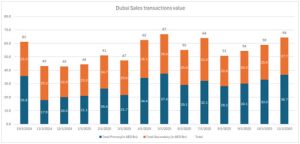
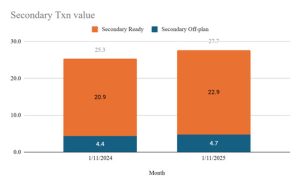
Momentum remained strong for Dubai’s real estate market in November, with capital inflows and activity levels substantially higher than the same month last year. After a slight cooling of the market in October, November’s combined primary and secondary sales reached around AED 64.4 bn, representing a 49% year-on-year increase in total transaction value. This uplift is anchored in a sharp acceleration of the primary market (105% YoY), complemented by steady growth in the secondary segment (9% YoY).
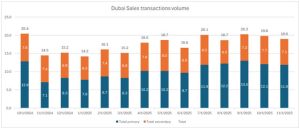
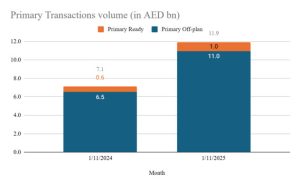
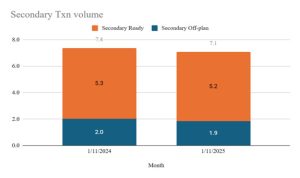
Transaction volumes mirrored this strength. Overall sales transactions were up 31% YoY, driven by a 67% rise in primary deals, while secondary transactions recorded a slight dip of 4%. The gap between value and volume growth, particularly in the primary segment, indicates higher average ticket sizes and sustained demand at the mid-to-upper end of the market.
Primary transactions
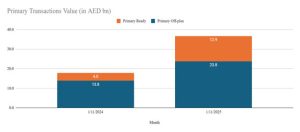
November’s big performer was the primary market, with sales rising 105% YoY, thanks to solid gains in off-plan and ready sales. Off–plan primary value rose 72% YoY, reflecting robust investor and end-user confidence in upcoming projects.
Ready primary value continues to be a stand-out performer in the primary segment, with November figures revealing a 220% YoY surge in value, up from 22% in November 2024. Off-plan primary volumes increased 68% YoY, while ready primary volumes climbed 63% YoY. This combination of strong volume growth and stronger value growth in ready primary indicates that buyers are favouring higher-value completed or nearly completed units in quality projects.
Business Bay, Palm Deira, Jabal Ali First and other emerging corridors continue to appeal to primary buyers.
Secondary transactions
Despite slightly softer volumes, Dubai’s secondary market remained resilient in November, with total value increasing 9% YoY. Within this market, off-plan value grew by 8% and secondary ready value was up by 10%. Ready units represented more than 80% of total secondary transaction value, with buyers favouring properties for immediate occupancy or solid rental income.
Secondary transaction volumes marginally cooled in November, with total secondary volumes declined 4% YoY. Meanwhile, off-plan secondary volumes fell 8% and ready secondary volumes edged down 2%.
Consumer preferences
Demand for apartments continues to be strong, comprising the overwhelming majority of searches for rental and purchase properties. This reflects the Dubai property market fundamentals, which have long been driven by apartment rentals and sales.
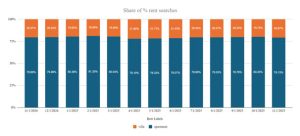
Around 80% of rental searches are for apartments, compared to 20% for villas and townhouses. Within apartment rentals, the share of studios and 1-bedroom units has increased YoY. This indicates that rising rents over the past year are prompting single people, couples and small families to consider more compact, affordable options.
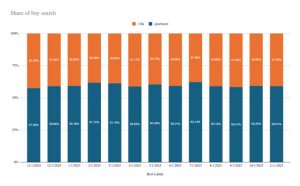
In the buyers’ market, apartments account for 58% of all purchase searches, while the share of villa searches has softened slightly over the year. About 70% of apartment searches focus on one- and two-bedroom units, confirming a strong preference for mid-sized, budget-conscious homes in well-connected communities.
Dubai’s mortgage market
Mortgage Finder’s November data reveals the AED 20K–40K monthly income group accounts for nearly 38% of all mortgage requests, making it the largest income segment in the market. This is up from 30% in October.
Within this middle income bracket, 85% of home seekers are searching for property to live in, while 15% are seeking investment opportunities. This dynamic group comprises active buyers, with a growing number of emerging investors.
Reflecting the overall market, middle income buyers show a strong inclination toward apartments. This represents an affordable, more readily available option for many professionals and smaller family households seeking to live and work in Dubai long term.
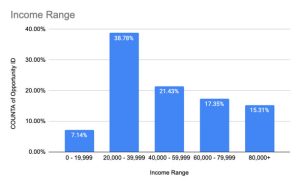
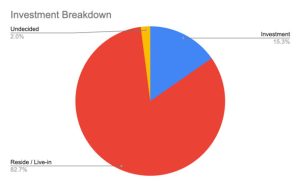
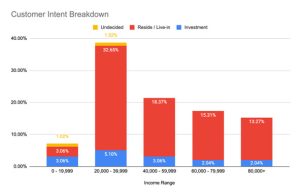
A detailed breakdown of customer intent by income shows that the middle income earners are leading the way in terms of seeking property to live in, as well as buying to invest. At the top income end of the spectrum, only 2.04% of buyers earning between AED 60K and 80K+ intend to buy investment properties, compared with 5.1% of buyers earning between AED 2OK and 40K.
While the middle income earners are leading the way in the apartment segment, higher income earners are ensuring the villa market remains steady. Buyers who earn between AED 40K and 60K are the most enthusiastic buyers of villas, with 13.27% favouring houses over the 8.16% who prefer apartments in this group. For the relatively affluent buyers – those earning AED 80K+ – villas remain popular at 10.2%, compared to 4.08% for villas.
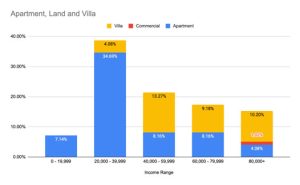
Our November data indicates that buying affordable property for personal use is a major priority for buyers earning between AED 20K and 40K. The strong interest in investment properties, especially more readily available apartments, among this group reflects increased popularity in property as a wealth-building strategy.
Lower availability of villas and townhouses, compared to apartments, offers exclusivity and reflects confidence in this market segment for higher-income buyers seeking to make investments with high returns. With these premium properties selling quickly, the villa segment, while smaller in terms of available properties, continues to boom.
With buyer attitudes shifting across apartment and villa segments, the drive towards viewing property purchases as a lifestyle choice and an investment opportunity indicates the growing maturity of the UAE property market.
A deeper dive into November’s mortgage data
The UAE mortgage market’s November momentum reinforces its position as a key driver within the broader real estate ecosystem. Property prices are remaining on an upward trajectory – particularly in prime and emerging communities – so more buyers are using mortgages to optimise affordability, preserve liquidity and enhance returns for end-user and investment-driven purchases.
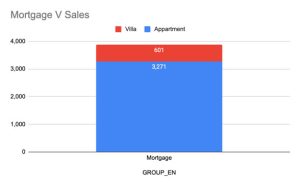
November’s mortgage activity remains robust, with more than 4,400 transactions worth AED 8.03 billion, signalling sustained confidence despite price rises and tightening global financial conditions. End-users still form the backbone of demand, but more investors are leveraging financing to maximise yield potential in a rising rental market, in particular as we move into a phase where we are seeing increases in handover units.
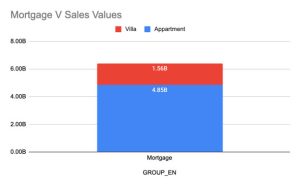
The apartment market continues to dominate the mortgage activity, with November figures showing sales of AED 31.73B and mortgages valued at AED 4.85B. Among villa buyers, sales were valued at AED 4.61B with AED 1.56B worth of mortgages. Apartment mortgages are popular among first-time buyers, residents keen to secure long-term housing, and investors seeking properties with good rental yields.
Villa transactions represent a smaller proportion of total volumes, but mortgage conversion remains healthy, driven by high-net-worth buyers and families upgrading to larger homes.
In the commercial segment, demand is on the rise among investors. Offices, shops and warehouses are seen as having strong investment potential in a growing economy with growing residency, therefore increasing demand for available units.
Cherif Sleiman, Chief Revenue Officer at Property Finder, said: “October’s slight cooling down of the market was never going to be a reliable indicator of the overall health of the Dubai property market. As the healthy November figures show, buyers are back and they are keen to find great deals after the expected summer slowdown. The middle income earners are truly the backbone of the market, supporting a booming apartment segment. As well as looking to put down roots as long-term UAE residents with their purchases, there is a growing interest in investment properties among middle income earners. Investment property is increasingly seen as a solid, long-term wealth building tool across middle and high-income demographics, which is a massive vote of confidence in Dubai’s maturing market.”
November’s data confirms that the UAE mortgage market remains resilient, competitive and essential to the country’s broader real estate growth story. As prices and rental markets strengthen, buyers – including end-users and investors – are increasingly relying on mortgages to enter or expand within the market. This trend underscores the maturity of the UAE property landscape, its growing appeal to investors and the critical role financing plays in supporting long-term sector expansion.